In Chinese tea culture, a vessel is never merely a container. It holds temperature. It holds rhythm. And sometimes, it holds centuries.
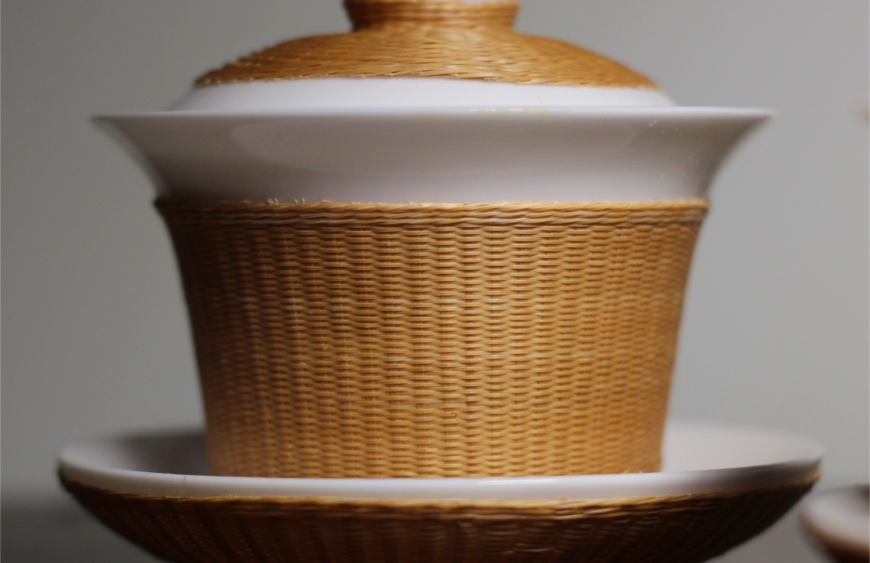
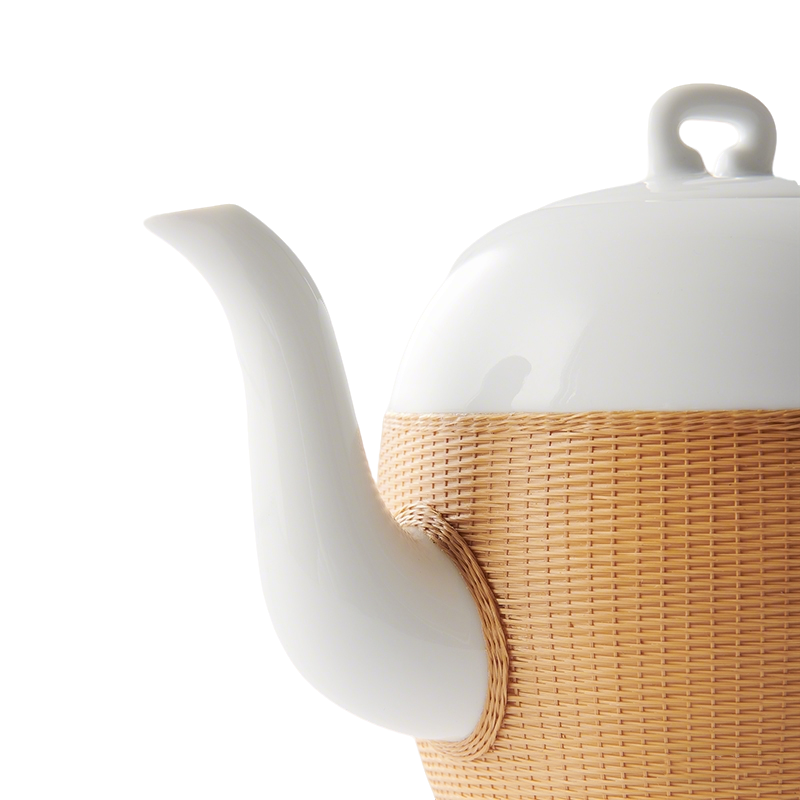
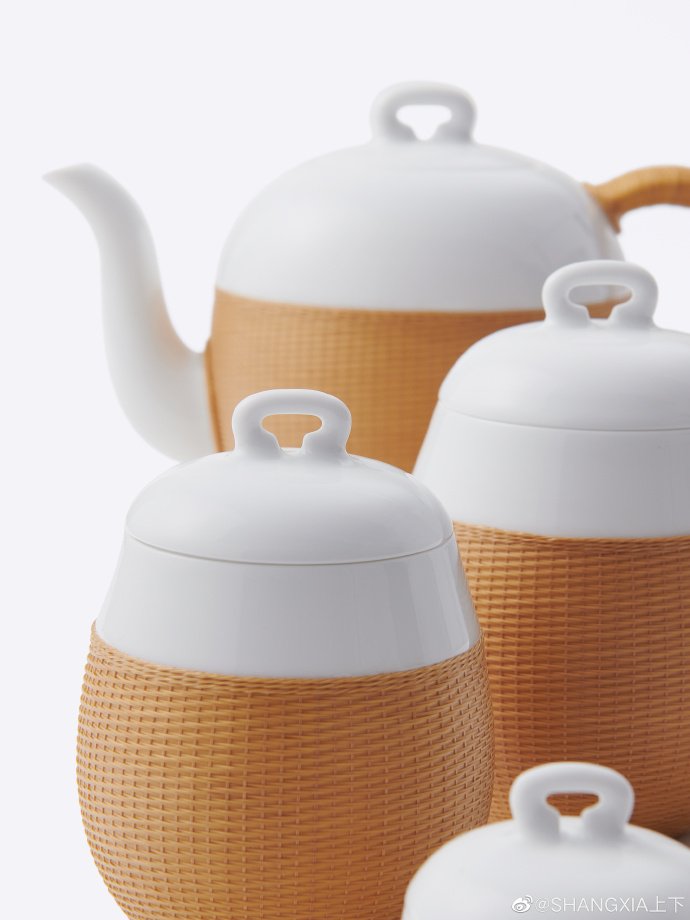
Among the many traditional materials used in tea ware, bamboo weaving(竹编) stands apart for its gentleness. Light in the hand, warm to the touch, and patient in its making, bamboo tea ware reflects a way of life shaped by time rather than speed.
Bamboo as a Living Material
Bamboo is not cut; it is chosen. Only mature bamboo—neither too young nor too old—can be used for fine weaving. After harvesting, the bamboo must be air-dried, split, shaved, and softened. Each strip is thinned by hand until it reaches a consistency that bends without breaking.
This process cannot be rushed. If the bamboo is too dry, it snaps. Too moist, and it loses strength.
In traditional workshops, artisans often rely more on touch than measurement. The fingers know when the bamboo is ready.
The Craft of Bamboo Weaving
Bamboo weaving is a national-level Chinese Intangible Cultural Heritage. Its techniques vary by region, but the essence remains the same: interlacing flexibility with structure.
For tea ware, the weaving must achieve three balances:
Tight enough to protect ceramic or clay vessels
Loose enough to allow heat to dissipate
Precise enough to sit naturally in the hand
Each line crosses another with intention. No glue. No shortcuts. Only repetition, rhythm, and memory.
A single bamboo tea cup holder may require hundreds of interwoven movements—each invisible when finished, yet essential to the whole.
Bamboo Weaving in Tea Culture
In traditional tea settings, bamboo often plays a supporting role rather than a central one. It does not compete with the tea. It frames it.
Bamboo-woven tea ware is commonly used to:
Insulate hot cups and gaiwans
Protect teapots during brewing
Create visual harmony on the tea table
Its presence softens the experience. The clink of porcelain becomes quieter. The act of pouring slows.
In this way, bamboo weaving aligns naturally with the philosophy of Chinese tea: restraint, balance, and respect for material.
Intangible Heritage as Living Practice
What defines intangible cultural heritage is not age alone, but continuity.
Bamboo weaving survives because it remains useful. Because it adapts. Because it still belongs in daily life.
When bamboo tea ware is used—not displayed—it continues the lineage of the craft. Every time it is handled, cleaned, and placed back on the tea table, the tradition moves forward rather than remaining frozen in the past.
A Quiet Companion to Tea
At Hermtea, we see bamboo weaving not as decoration, but as a companion to mindful living.
It reminds us that refinement does not require complexity. That warmth can come from restraint. That the most meaningful objects are often those made slowly, by hand, for moments that ask us to pause.
Tea teaches us to wait. Bamboo teaches us how.
Hi, I’m Chris — at Hermtea, I gently invite you to walk with me into Chinese tea.
Select the fields to be shown. Others will be hidden. Drag and drop to rearrange the order.
Image
SKU
Rating
Price
Stock
Description
Weight
Dimensions
Additional information
Add to cart
Click outside to hide the comparison bar
Compare
We look forward to providing you with the best products!
We’re in the making — refining our collection and building partnerships with genuine makers in China.
Browse freely, but please hold off on ordering for now. Perfection takes time, and we promise it’ll be worth it.